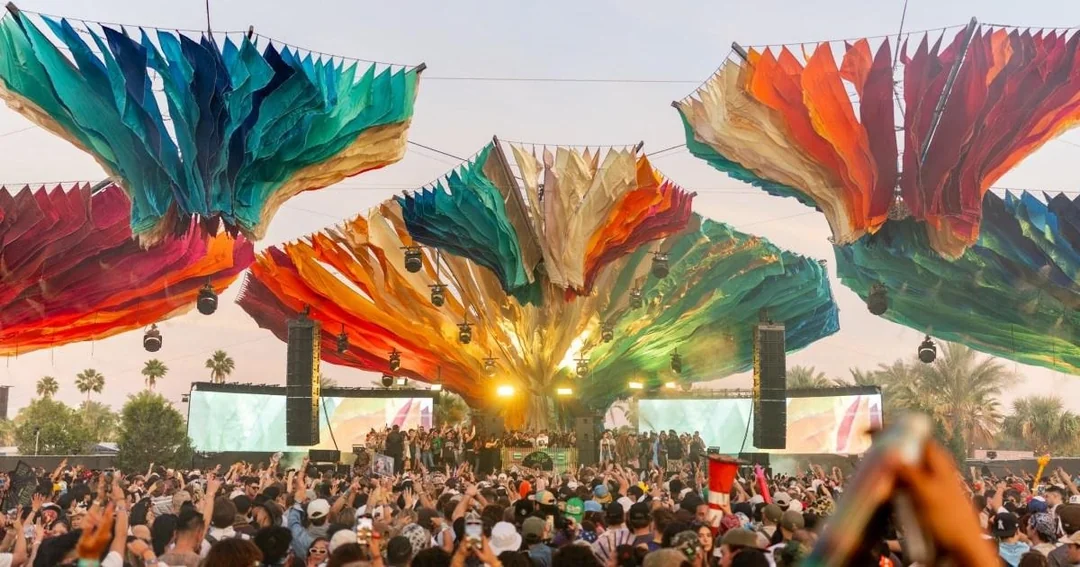
After a week like this, where the Coachella Valley Music and Arts Festival cycle, celebrity narratives, fashion debates, viral clips, and rapid-fire cultural commentary all collided into one continuous feed, the underlying feeling isn’t just engagement—it’s fatigue. Not the dramatic kind, but the quieter realization that everything is moving faster than it can actually be processed.
In 2026, cultural attention behaves like a constant stream of overlapping inputs. One moment becomes ten interpretations. One performance becomes hundreds of clips. One outfit becomes a global debate. And while each piece feels important in isolation, the cumulative effect is overwhelming. The result isn’t deeper understanding—it’s constant partial awareness.
That’s why “slow down after the noise” is becoming less of a suggestion and more of a necessary reset. There is a growing recognition that not every moment needs to be tracked, reacted to, or analyzed in real time. The expectation of keeping up—across entertainment, news, trends, and discourse—has quietly turned into an unspoken pressure that rarely pauses.
But the reality is simple: no one is actually keeping up with everything. The illusion of full awareness comes from fragments—clips, summaries, reactions, and secondhand narratives stitched together into something that feels complete. In practice, most people are experiencing the same content in partial form, just at different speeds and angles.
Stepping back doesn’t mean disconnecting from culture. It means refusing the idea that constant participation is required for relevance. The pace of digital attention will continue to accelerate, but individual attention doesn’t have to mirror it. There is space to observe without reacting, to consume without immediately responding, and to let moments pass without turning them into output.
What makes this increasingly important is how quickly emotional cycles now move. Excitement, outrage, humor, and fatigue can all happen within the span of a single day. Without intentional distance, it becomes difficult to distinguish between what is meaningful and what is simply loud. Slowing down restores that distinction.
This isn’t a rejection of culture—it’s a recalibration of relationship to it. The same systems that create constant visibility also create constant demand for attention. Choosing not to engage with everything is not absence; it is selectivity. And in an environment defined by excess input, selectivity becomes a form of clarity.
Ultimately, the message isn’t about withdrawal. It’s about balance. The noise will continue, the cycles will repeat, and the pace will not naturally slow down on its own. But participation doesn’t have to be total to be meaningful. You don’t have to keep up with everything to understand what matters.